Governor Hochul Announces Plan to Veto Food Additives Ban Following Legislative Push, Citing Grocery Inflation
Balancing consumer health advocacy against escalating concerns over retail food prices and interstate supply-chain disruption, Governor Kathy Hochul confirmed her intention to veto a landmark legislative measure that would have outlawed three prominent food additives across New York State grocery shelves.
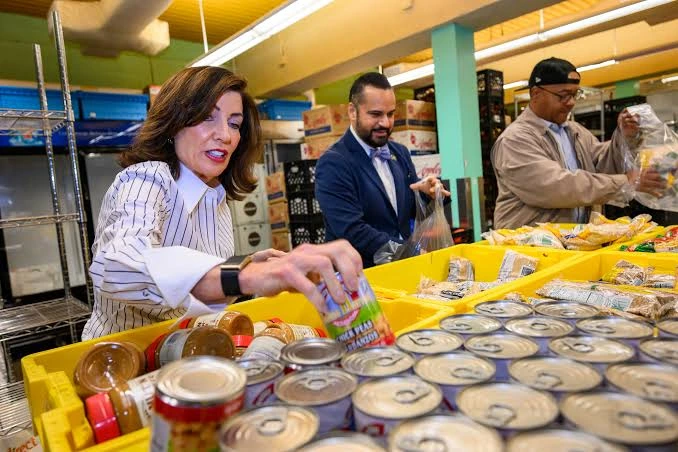
- Governor Hochul announces planned veto of Assembly Bill 6424, which sought to ban FD&C Red No. 3, propylparaben, and potassium bromate statewide.
- Administration cites risk of severe retail price spikes for staple packaged goods, bagels, and pizzas, as well as regulatory conflicts with federal FDA standards.
- Sponsoring lawmakers and public health coalitions vow to reintroduce revised ingredient oversight legislation in the upcoming 2027 legislative session.
ALBANY, N.Y. — In a decisive executive move that has set off intense debate between consumer health advocates and commercial food trade associations, Governor Kathy Hochul announced over the weekend her intention to veto a high-profile legislative package that would have established the nation's strictest state-level prohibitions on several widely used chemical food additives.
The legislation, passed by substantial majorities in both the State Senate and Assembly during the closing hours of the regular legislative session, sought to bar the commercial manufacturing, distribution, and sale of any food or beverage containing three specific chemical compounds: FD&C Red No. 3, propylparaben, and potassium bromate. The substances, commonly utilized as synthetic coloring agents, mold inhibitors, and dough strengtheners in commercial sandwich breads, store-bought bagels, canned baked goods, and frozen pizzas, have been the subject of intensifying scientific scrutiny regarding potential behavioral and metabolic health impacts.
However, in statements released through senior administration policy aides and confirmed during a regional economic appearance, Governor Hochul underscored that while protecting New York families from toxic contaminants remains an executive priority, unilateral state-level ingredient bans carry severe economic unintended consequences for everyday consumers already burdened by persistent grocery inflation.
"At a time when working families from Buffalo to Brentwood are scrutinizing every single receipt at the supermarket checkout line, enacting a state-level regulatory patchwork that fractures interstate food distribution would deliver an unacceptable price shock to New York households," an executive chamber spokesperson stated. "Major food manufacturers have made it unequivocally clear that formulating and packaging New York-only product lines would force regional distributors to either withdraw affordable staples from local bodegas and supermarket shelves or pass devastating reformulation surcharges directly onto consumers."
The decision drew immediate, sharply polarized reactions across the political spectrum. Sponsoring lawmakers, led by Manhattan State Senator Brian Kavanagh and Assembly Member Anna Kelles, expressed profound disappointment with the Governor's announced veto. They cited peer-reviewed toxicology studies and pointed to California's enactment of the California Food Safety Act as evidence that large-scale consumer packaged goods conglomerates possess the technical capacity to substitute natural colorants—such as beet juice and turmeric—without destabilizing wholesale pricing structures.
"Every year that Albany hesitates to purge known toxic chemical additives from our school cafeterias and family grocery carts is a year in which our children bear the avoidable burden of developmental and metabolic harm," Senator Kavanagh remarked in a joint statement. "California proved that the sky does not fall when states take common-sense steps to protect their citizens. New York should be leading the march toward clean food standards, not deferring to corporate agribusiness lobbyists who prioritize synthetic shelf-life over public wellness."
Conversely, business and agricultural coalitions hailed the Governor's pragmatism. The Business Council of New York State, the Food Industry Alliance, and the Bodega and Small Business Association of New York had aggressively lobbied the executive chamber against the measure. They argued that because the federal Food and Drug Administration (FDA) exercises primary statutory jurisdiction over food safety determinations under the Federal Food, Drug, and Cosmetic Act, state-by-state prohibitions create severe logistical chaos, particularly for independent grocers and regional distributors who source wholesale goods across Pennsylvania, New Jersey, and Connecticut.
The planned veto marks a defining early signal of Governor Hochul's governing approach as she enters her second full term, underscoring an executive willingness to break with progressive legislative supermajorities on economic and regulatory mandates that risk exacerbating household cost-of-living burdens. Legislative leaders in Albany indicated that while an immediate override attempt appears unlikely before the year ends, they plan to hold comprehensive public hearings in January to explore phased-in compliance schedules and tax credits for regional bakeries that transition away from synthetic dough conditioners voluntarily.
Congressional testimony scheduled for later this month is expected to address cross-agency coordination, focusing specifically on supply chain resiliency, sovereign compute clusters, and long-term capital allocation strategies designed to safeguard domestic competitiveness.