Hochul and MTA Press Congress for Billions in Transit Funds
Governor Kathy Hochul and MTA leadership launched an urgent federal lobbying offensive, warning that New York carries 43% of national transit riders but receives only 17% of federal transit funding.
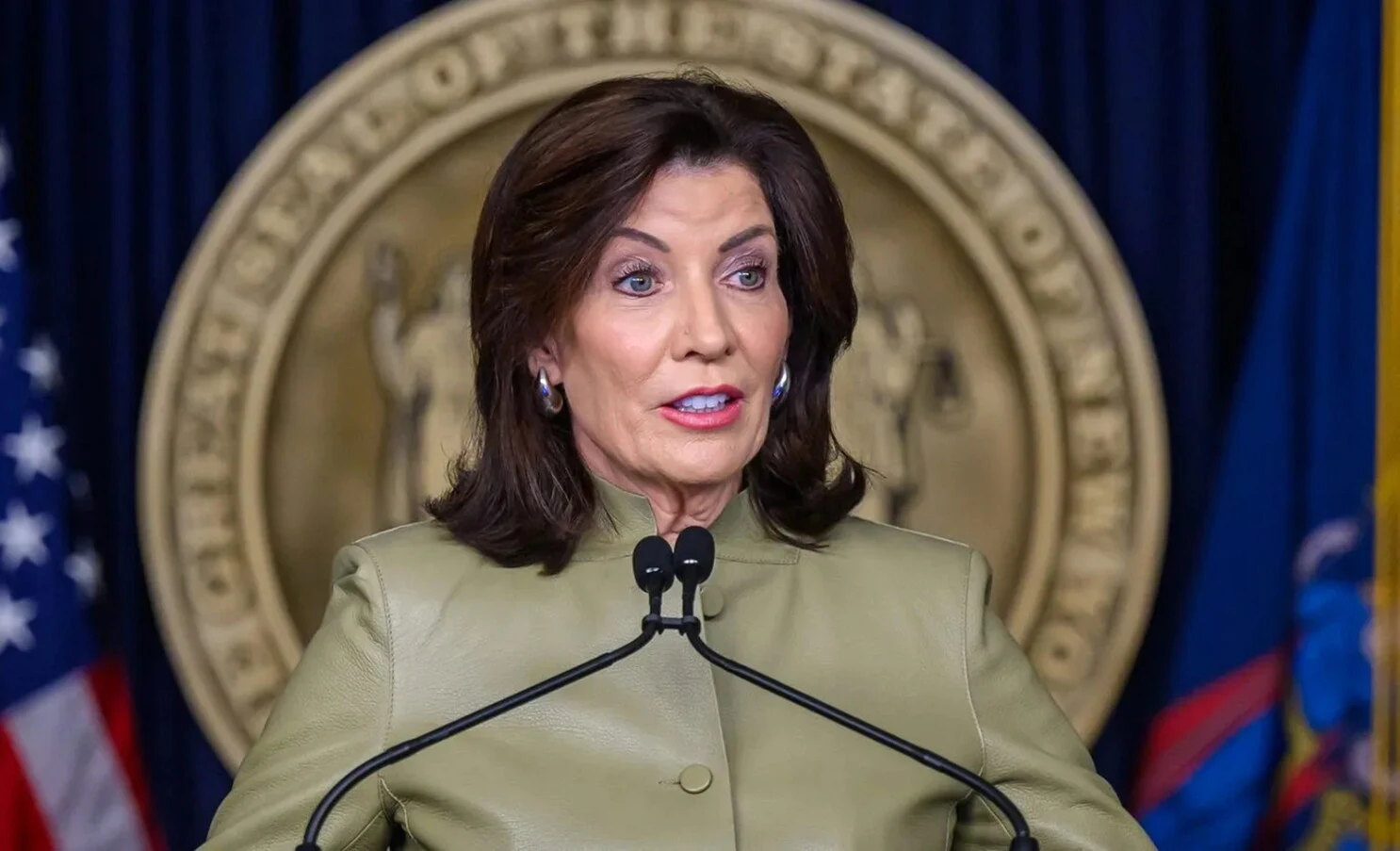
- Governor Kathy Hochul and MTA CEO Janno Lieber mount federal lobbying drive ahead of December 11 funding deadline.
- Data shows NYC handles 43% of U.S. transit ridership but receives only 17% of federal transit formula dollars.
- State seeks tariff waivers on railcars and electric buses to prevent an estimated $1B equipment cost surge.
NEW YORK & WASHINGTON — In a high-stakes confrontation over the future of urban infrastructure, New York Governor Kathy Hochul and Metropolitan Transportation Authority (MTA) Chair and CEO Janno Lieber launched an aggressive emergency lobbying blitz in Washington on Wednesday, demanding that Congress rectify a massive federal transit funding deficit that threatens the economic vitality of the entire tri-state region. Presenting newly certified operational data, state and transit officials revealed that while New York's subways, buses, and commuter rail systems account for nearly 43% of all mass transit journeys in the United States, the agency receives merely 17% of federal formula transit assistance, creating an unsustainable fiscal imbalance ahead of a pivotal December 11 federal funding deadline.
The public affairs offensive comes at a perilous financial moment for the transit authority. With pandemic-era federal relief exhausted, ridership stabilizing below pre-2020 peaks, and escalating operational maintenance costs, the MTA warned that failure to secure advance federal appropriations will blow an unrecoverable multi-hundred-million-dollar hole into its fiscal 2027 capital program. Such a shortfall would jeopardize vital modernization projects, including signal automation along the Lexington Avenue subway line, accessibility upgrades across outer-borough stations, and phase two of the Second Avenue Subway extension into East Harlem.
Compounding the crisis, Governor Hochul formally petitioned federal commerce and transportation regulators for comprehensive tariff exemptions on imported train cars, electric buses, and critical signaling components manufactured overseas. Officials estimate that impending trade tariffs could add upwards of $1 billion in direct surcharges to scheduled rolling stock procurements, forcing painful tradeoffs between purchasing new rail equipment and maintaining current service frequencies across the five boroughs, Long Island, and the Hudson Valley.
"New York's transit network is not just a regional amenity; it is the economic cardiovascular system of the United States," Governor Hochul asserted during a joint Capitol Hill press briefing alongside transit labor leaders and regional business executives. "Every day, millions of essential workers, students, entrepreneurs, and tourists depend on our subways and commuter rails to power nearly 10% of the entire gross domestic product of this nation. To ask New York taxpayers to shoulder almost half of America's transit ridership with less than a fifth of federal transit investment is economically irrational and fundamentally unfair. Washington cannot take New York for granted."
MTA Chair Janno Lieber echoed the governor's warnings, laying out the potential consequences if federal lawmakers fail to include dedicated capital backstops in the upcoming omnibus appropriations package. Lieber underscored that without federal parity and targeted relief from crippling equipment tariffs, the authority would be pushed toward unpalatable options, including accelerated fare hikes, deferred state-of-good-repair overhauls, or delays to the Interborough Express (IBX) light rail project linking Brooklyn and Queens.
Civic advocacy organizations, urban planning bodies, and Wall Street business groups have rallied behind the state's push. The Partnership for New York City issued a companion analysis warning that any forced degradation in transit reliability would trigger cascading economic fallout, disincentivizing corporate returns to commercial business districts and eroding municipal tax bases. As negotiations in Congress heat up over surface transportation reauthorization, New York's leaders have drawn a definitive line, making equitable transit dollars the ultimate test of federal urban commitment.
Congressional testimony scheduled for later this month is expected to address cross-agency coordination, focusing specifically on supply chain resiliency, sovereign compute clusters, and long-term capital allocation strategies designed to safeguard domestic competitiveness.