Second Circuit Federal Appeals Court Revives Donald Trump's Bid to Move Manhattan Criminal Case to Federal Court
A three-judge panel of the 2nd U.S. Circuit Court of Appeals on Monday vacated a lower-court order rejecting Donald Trump's attempt to transfer his New York criminal hush-money case to federal court, directing a Manhattan federal judge to hold hearings on whether federal jurisdiction applies.
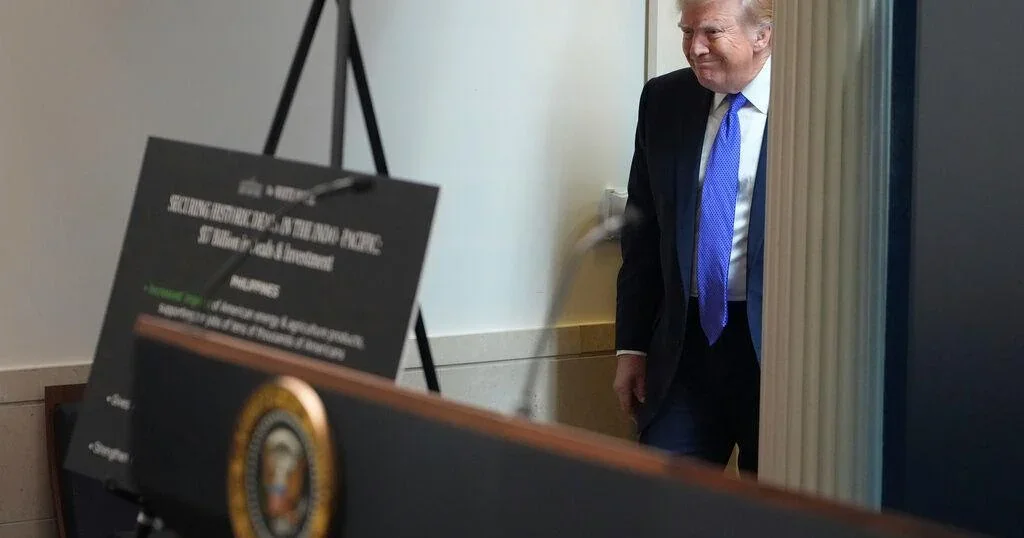
- A 2nd U.S. Circuit Court of Appeals panel ruled that U.S. District Judge Alvin Hellerstein acted prematurely in dismissing Trump's federal removal petition.
- The appellate order requires the district court to assess whether Trump's 2024 state felony conviction intersects with official presidential acts under federal officer removal statutes.
- Manhattan District Attorney Alvin Bragg's office argued that removal after a state trial verdict is procedurally improper and threatens state court sovereignty.
In a consequential ruling that disrupts New York’s criminal court proceedings, a three-judge panel of the 2nd U.S. Circuit Court of Appeals in Lower Manhattan on Monday revived former President Donald Trump’s long-shot legal battle to transfer his state criminal hush-money case into federal court.
The decision vacates a previous order issued by U.S. District Judge Alvin K. Hellerstein, who had summarily dismissed Trump’s federal removal petition without an evidentiary hearing in late 2024. The 2nd Circuit panel ruled that Judge Hellerstein acted prematurely and failed to apply the appropriate procedural scrutiny required under the federal officer removal statute, Title 28, Section 1442 of the U.S. Code. The case has now been remanded back to Manhattan federal court with instructions to determine whether Trump’s post-verdict legal motions raise colorable federal defenses tied to presidential immunity.
### The Federal Removal Battle
Trump was convicted in May 2024 by a Manhattan Supreme Court jury on 34 felony counts of falsifying business records related to payments made to adult film actress Stormy Daniels ahead of the 2016 presidential election. His legal team has argued that because certain evidence introduced at trial involved communications and activities during his first term in the White House—such as discussions with former communications director Hope Hicks and ethics filings—the proceedings touched upon official presidential duties governed by federal law.
Following the U.S. Supreme Court’s landmark July 2024 ruling in *Trump v. United States*, which established broad presidential immunity for core constitutional duties and official acts, Trump's lawyers petitioned to move the entire Manhattan prosecution to federal court. Their ultimate goal is to vacate the state jury verdict on federal constitutional grounds or seek dismissal in a friendlier federal forum.
In a 26-page opinion, the appellate panel—comprising Circuit Judges Joseph F. Bianco, Michael H. Park, and Alison J. Nathan—emphasized that while federal officer removal typically occurs prior to trial, federal statutory provisions do not categorically foreclose removal after a verdict when significant federal constitutional questions arise regarding official acts.
"The federal officer removal statute is designed to ensure that federal defenses, including constitutional immunities asserted by executive officers, are evaluated with the full procedural guarantees of a federal forum," Judge Bianco wrote for the panel. "By summarily dismissing the removal petition without affording the parties an opportunity to brief and argue the jurisdictional nexus, the district court failed to conduct the searching inquiry required by our precedent."
### Manhattan District Attorney Pushes Back
The ruling represents a procedural setback for Manhattan District Attorney Alvin Bragg, whose prosecutors have vigorously maintained that Trump’s reimbursement scheme was purely private conduct executed by a private citizen to conceal personal campaign liabilities, bearing no relationship to federal governance or presidential power.
In a statement following the ruling, a spokesperson for the Manhattan District Attorney’s Office reiterated their confidence in the state conviction. "Thirty-four New York citizens evaluated the evidence and unanimously convicted Donald Trump of 34 felony counts under New York state law," the spokesperson said. "The federal removal statute was never intended to serve as an appellate end-run around state jury verdicts. We look forward to presenting our arguments in district court and demonstrating that federal jurisdiction does not apply."
Legal analysts noted that the remand does not automatically dismiss the conviction or permanently relocate the case. Instead, Judge Hellerstein must now establish a briefing schedule, hear oral arguments, and evaluate whether the evidence introduced at trial contained impermissible official-acts material under the Supreme Court's immunity framework.
### Broader Constitutional Implications
Constitutional law scholars characterized the 2nd Circuit’s intervention as an extraordinary test of federal-state judicial relations. If a federal judge were to assert jurisdiction over a finalized state criminal trial, it would create an unprecedented mechanism for state criminal defendants asserting federal defenses to bypass state appellate processes.
"This decision reopens a complex federalism battle that most observers considered procedurally settled," said Karen Greenfield, professor of constitutional law at New York University School of Law. "If state criminal convictions can be removed to federal court after a jury has returned a verdict, it fundamentally alters the balance between sovereign state courts and federal judicial authority. The district court now faces the delicate task of balancing executive immunity against the finality of state court verdicts."
The case now returns to Manhattan federal court, where Judge Hellerstein is expected to issue a scheduling order in the coming days, guaranteeing that the legal aftermath of New York's historic criminal trial will extend deep into the federal appellate system.
Congressional testimony scheduled for later this month is expected to address cross-agency coordination, focusing specifically on supply chain resiliency, sovereign compute clusters, and long-term capital allocation strategies designed to safeguard domestic competitiveness.