US School Closures Accelerate as Budget and Enrollment Drop
More than 1,150 public schools closed nationwide over the past academic year as cash-strapped school districts grapple with declining birth rates, plunging student enrollment, and the sudden expiration of federal pandemic relief subsidies.
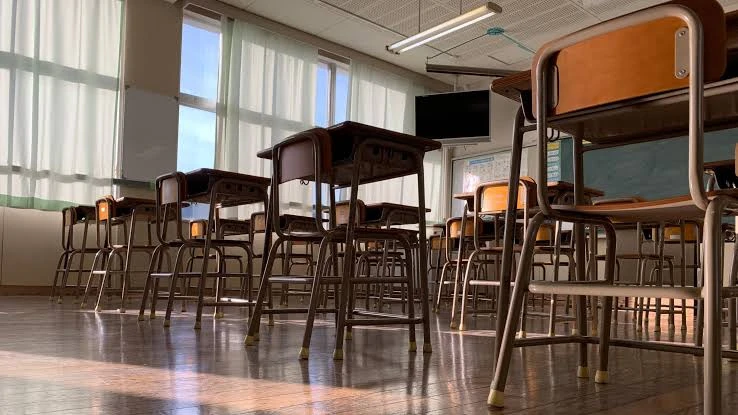
- Over 1,150 public schools closed across the United States during the previous academic school year.
- Plunging national birth rates and the total expiration of federal ESSER pandemic grants drive deficits.
- Parents and community leaders express alarm over lost neighborhood hubs and extended daily student bus commutes.
CHICAGO & SACRAMENTO — Across urban neighborhoods, suburban corridors, and rural heartlands, an accelerating wave of public school closures is profoundly transforming the landscape of American primary and secondary education. Comprehensive new data released by state education departments and compiled by educational policy researchers reveals that more than 1,150 public schools shuttered their doors permanently during the last academic year alone, with hundreds of additional campuses slated for consolidation or imminent closure before the start of the 2027 school term.
The unprecedented wave of campus shutdowns is being driven by a powerful confluence of structural demographic contractions and severe fiscal cliffs. Demographers point to the persistent decline in national birth rates that began following the Great Recession, which has now produced a sharp drop in elementary and middle school cohorts across major metropolitan areas. Compounding these demographic shifts is the total exhaustion of the $190 billion in federal Elementary and Secondary School Emergency Relief (ESSER) funds, which school boards had utilized over the past four years to maintain staffing levels, subsidize tutoring initiatives, and keep under-enrolled facilities operational.
From Philadelphia and Boston to Milwaukee, Denver, and Oakland, local school boards have been forced into agonizing public hearings where weeping parents and frustrated educators plead to save historic neighborhood institutions. In many mid-sized cities, district enrollment has contracted by twenty to thirty-five percent over the past decade as families have migrated to lower-cost Sunbelt states or enrolled children in public charter systems, private academies, and homeschooling networks. With per-pupil state funding formulas tied directly to average daily attendance, underpopulated campuses have become financially unsustainable to maintain.
"We are witnessing an unprecedented structural contraction that will reshape American public education for the next generation," said Dr. Elena Rodriguez, senior fellow at the National Institute for Public Education Policy. "Districts can no longer postpone difficult consolidations. Running school buildings that are operating at thirty or forty percent of their architectural capacity drains critical funding away from classroom instruction, specialized special education services, and advanced academic coursework."
The ripple effects of widespread school closures extend far beyond budgetary balance sheets. Sociologists and urban planners warn that closing neighborhood schools disproportionately impacts working-class communities of color, eliminating vital community hubs that provide after-school childcare, nutrition assistance, and neighborhood social cohesion. Displaced students often face significantly longer bus commutes across town, while abandoned school properties risk becoming blighted municipal eyesores if cities fail to quickly repurpose the physical facilities into affordable housing, community healthcare clinics, or vocational training centers.
Congressional testimony scheduled for later this month is expected to address cross-agency coordination, focusing specifically on supply chain resiliency, sovereign compute clusters, and long-term capital allocation strategies designed to safeguard domestic competitiveness.