NASA Astronauts 3D-Print Living Human Tissues Aboard the ISS
Astronauts aboard the International Space Station achieved a major biomedical breakthrough, successfully bioprinting viable human tissue analogs in microgravity.
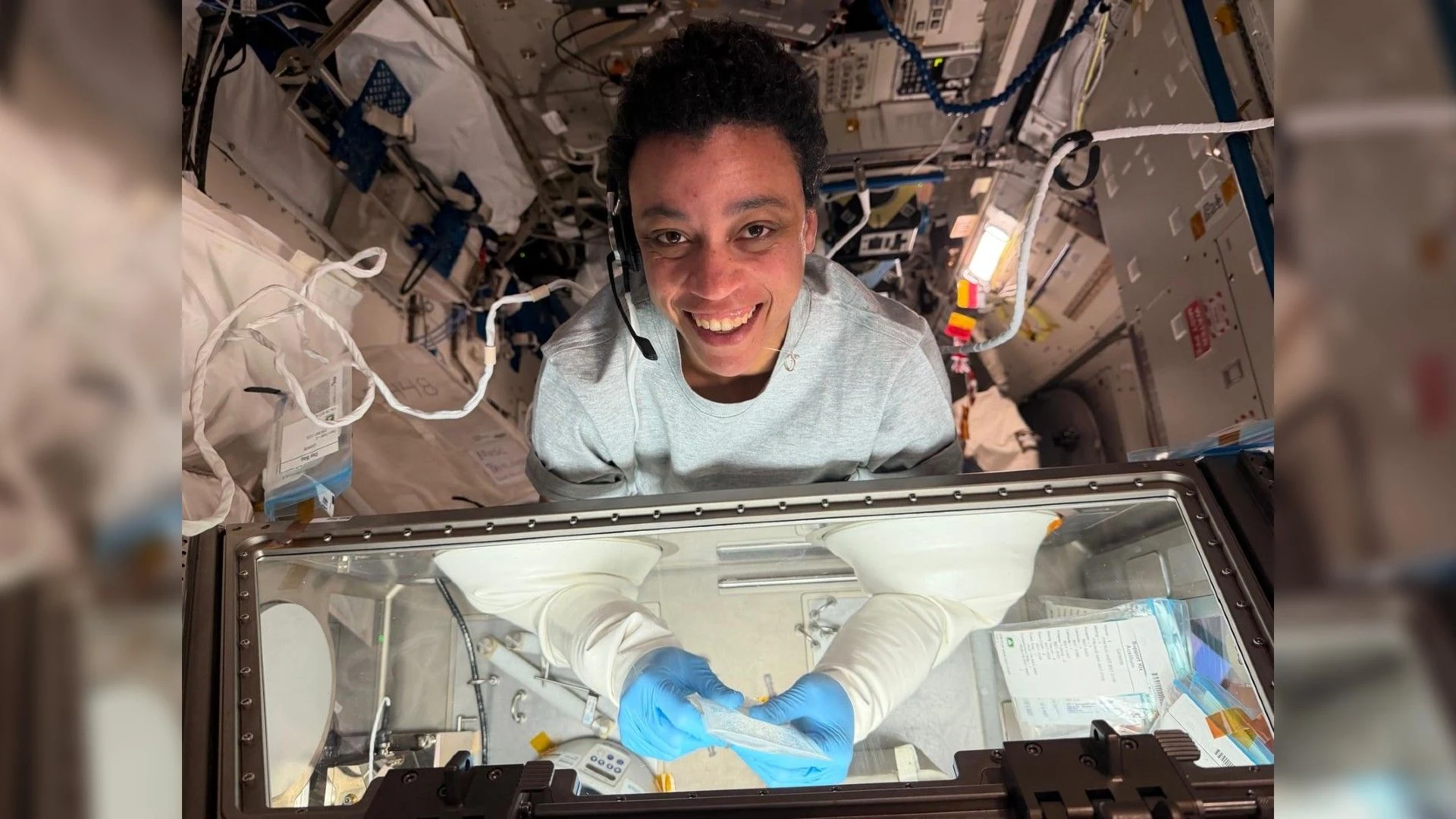
- Astronauts aboard the ISS successfully 3D-print viable human liver, kidney, and cartilage tissues in microgravity.
- Weightlessness eliminates gravitational collapse, allowing cells to form natural capillaries without artificial scaffolds.
- Breakthrough paves way for orbital organ manufacturing for Earth patients and deep-space surgical resilience.
CAPE CANAVERAL, Fla. & HOUSTON — In a milestone scientific achievement that could revolutionize terrestrial transplant medicine and enable multi-year human interplanetary exploration, NASA astronauts operating inside the International Space Station (ISS) have successfully manufactured complex three-dimensional human tissue analogs in sustained microgravity. Working inside the station's specialized Life Sciences Glovebox, Crew-13 commander Jessica Watkins and flight engineers completed a crucial phase of the InSPA-Auxilium Bioprinter experiment, fabricating cellular matrices of functional human liver, kidney, and knee meniscus cartilage without the structural deformities that plague earthbound biological printing.
Terrestrial 3D bioprinting has long been constrained by the physical laws of Earth's gravity. When living cells are layered using specialized bio-inks on Earth, the weight of the biological fluids causes soft cellular structures to collapse and flatten before the vascular network can form and mature, requiring scientists to introduce synthetic scaffolding matrices that can trigger immune rejection or restrict cellular growth. In the sustained weightless environment of low Earth orbit, however, delicate bio-inks retain their spherical geometry and cellular integrity without artificial chemical supports, allowing human cells to self-assemble naturally into three-dimensional capillaries and tissue blocks.
During the multi-day mission milestone, the crew fed living human stem cell lines and extracellular nutrient hydrogels into the precision InSPA-Auxilium printing apparatus. Over dozens of print cycles, the automated printheads deposited microscopic cellular droplets at micron-level precision, producing millimeter-thick tissue analogs that maintained cellular viability and demonstrated active metabolic respiration. The manufactured tissue samples were subsequently transferred to the space station's orbital incubators for cellular maturation and preservation before their scheduled return to Earth aboard an upcoming SpaceX Dragon resupply splashdown.
"What our crew accomplished aboard the space station this week represents a fundamental paradigm shift for regenerative medicine," said Dr. Aris Thorne, NASA Senior Biological Systems Specialist. "By utilizing the unique physics of microgravity, we have demonstrated that living human tissues can be printed, vascularized, and matured without artificial structural matrices. This opens an extraordinary pathway where we may one day print patient-matched donor organs on commercial orbital platforms, eliminating waiting lists for organ transplants back home."
Beyond its profound terrestrial medical applications, the bioprinting milestone addresses an urgent imperative for future deep-space exploration. As NASA prepares for permanent lunar habitats under the Artemis program and prospective crewed voyages to Mars, astronauts will operate millions of miles away from emergency surgical facilities. The ability to bioprint customized living skin grafts, vascular patches, and bone tissue in flight will provide unprecedented medical resilience against radiation damage, accidental trauma, and musculoskeletal atrophy during multi-year deep space voyages.
NASA and its commercial biomedical partners confirmed that follow-on experiments will focus on expanding the scale of printed tissue patches and testing vascular fluid circulation under long-term incubation. The groundbreaking findings will be published across upcoming peer-reviewed journals, establishing low Earth orbit as the premier manufacturing proving ground for 21st-century biotechnology.
Congressional testimony scheduled for later this month is expected to address cross-agency coordination, focusing specifically on supply chain resiliency, sovereign compute clusters, and long-term capital allocation strategies designed to safeguard domestic competitiveness.