Crude Oil Surges Above 89 Dollars as US Strikes on Iranian Drone Bases in Strait of Hormuz Shake Global Energy Markets
Brent and West Texas Intermediate benchmark crude prices spiked to four-month highs following targeted U.S. military retaliatory strikes against naval drone installations on Qeshm Island, stoking maritime shipping insurance premiums.
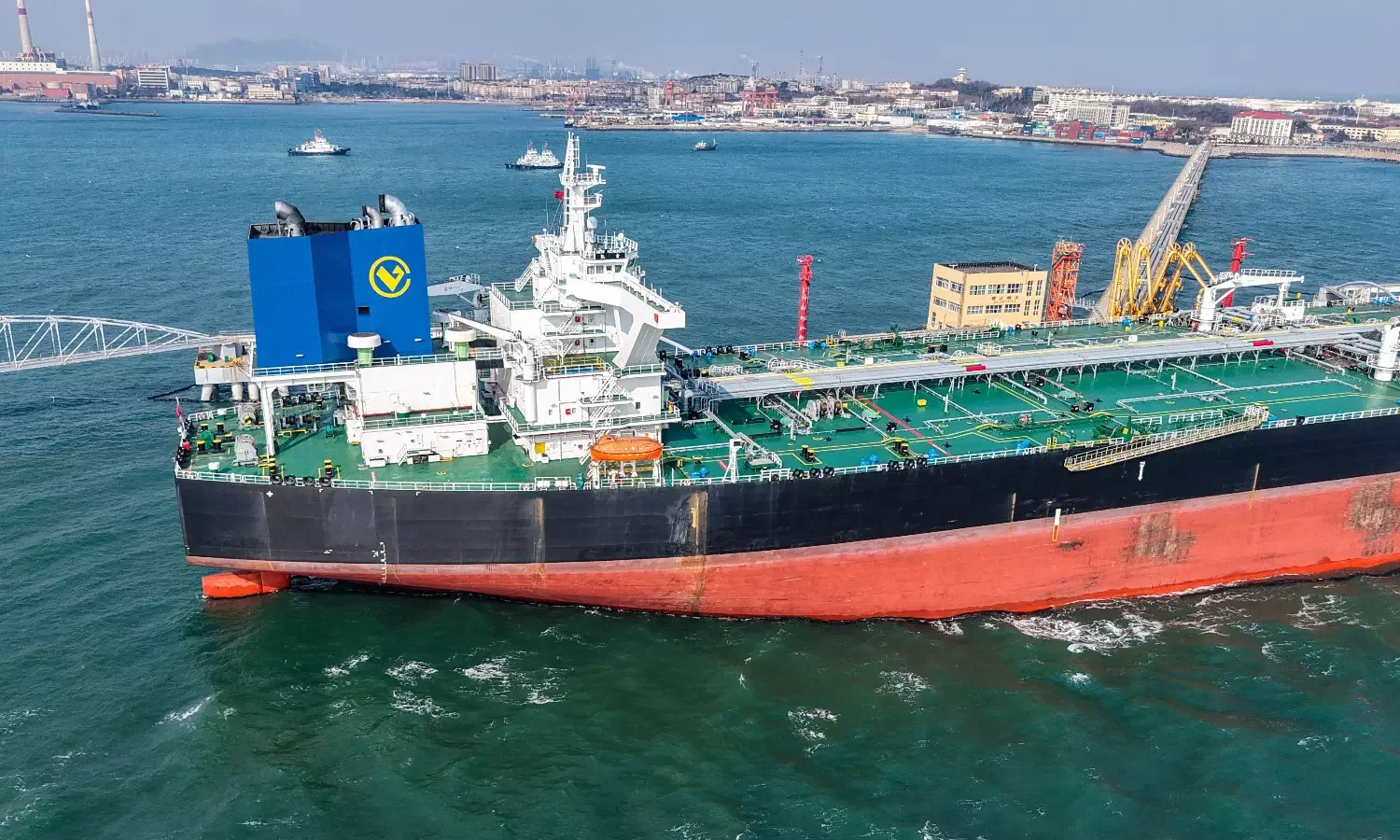
- Brent crude rallies toward $90/barrel following precision U.S. strikes on Iranian drone facilities on Qeshm Island.
- Maritime insurance underwriters elevate war-risk premiums for commercial vessels transiting the Strait of Hormuz.
- Federal Reserve economists closely monitor refined fuel price spikes for potential inflationary pressure on transport costs.
NEW YORK & LONDON — International commodity exchanges experienced acute volatility Tuesday as global crude oil benchmark contracts surged past $89 per barrel, driven by escalating military friction across the world’s most sensitive maritime transit corridor. Brent crude futures jumped 4.8 percent to touch $89.65 a barrel during early trading on the Intercontinental Exchange in London, while U.S. West Texas Intermediate (WTI) crude climbed to $86.20 on the New York Mercantile Exchange, registering its largest single-day percentage gain since mid-summer.
The sudden market repricing follows confirmed reports from the Pentagon that United States Central Command (CENTCOM) naval and air forces conducted precision defensive strikes against coastal naval drone launch pads and radar installations operated by the Islamic Revolutionary Guard Corps on Qeshm Island, located directly adjacent to the Strait of Hormuz. Defense Department officials stated that the kinetic strikes were authorized in direct response to repeated unmanned aerial and explosive sea-surface drone harassment targeting commercial chemical and crude tankers traversing international transit lanes in the Persian Gulf over the preceding seventy-two hours.
Energy economists and maritime logistics analysts noted that the physical volume of oil flowing through the Strait of Hormuz—roughly 21 million barrels per day, equivalent to more than twenty percent of global petroleum consumption—makes even localized skirmishes an immediate trigger for financial risk premiums. Marine insurance syndicates operating at Lloyd's of London responded rapidly to the strikes by designating wider zones of the Persian Gulf and Gulf of Oman as high-risk navigational areas, sharply raising war risk insurance premiums for ultra-large crude carriers and prompting several international shipping conglomerates to consider temporary rerouting protocols.
In Washington, White House national security officials emphasized that the military strikes were strictly defensive, limited in scope, and calibrated to avoid civilian energy processing facilities. During an emergency economic briefing, administration spokespersons indicated that backchannel diplomatic communications facilitated by Qatari and Omani mediators remain active, with signals from regional capitals suggesting a shared desire to avert broader regional conflict. Simultaneously, the Department of Energy reiterated that the U.S. Strategic Petroleum Reserve maintains robust operational reserves and stands ready to counter any sustained physical supply disruptions if commercial flows are compromised.
The energy price shock arrives at an exceptionally delicate juncture for domestic financial markets and the Federal Reserve’s monetary policy trajectory. Wall Street analysts at Goldman Sachs and JPMorgan cautioned that sustained energy prices above $90 per barrel could bleed into downstream refined products—including diesel, aviation jet fuel, and retail gasoline—re-igniting consumer price index inflation and limiting the central bank’s leeway to enact projected interest rate cuts in early 2027. Trading desks report heavy trading volumes in upside crude call options, reflecting market hedging against potential supply bottlenecks over the coming weeks.
Congressional testimony scheduled for later this month is expected to address cross-agency coordination, focusing specifically on supply chain resiliency, sovereign compute clusters, and long-term capital allocation strategies designed to safeguard domestic competitiveness.