Supreme Court Declines Emergency Bid to Block California Mail-in Ballots on Midterm Election Eve
In a decisive election-eve order, the U.S. Supreme Court turned away an emergency application seeking to invalidate hundreds of thousands of California mail-in ballots, preserving existing voting rules as millions head to polling stations nationwide.
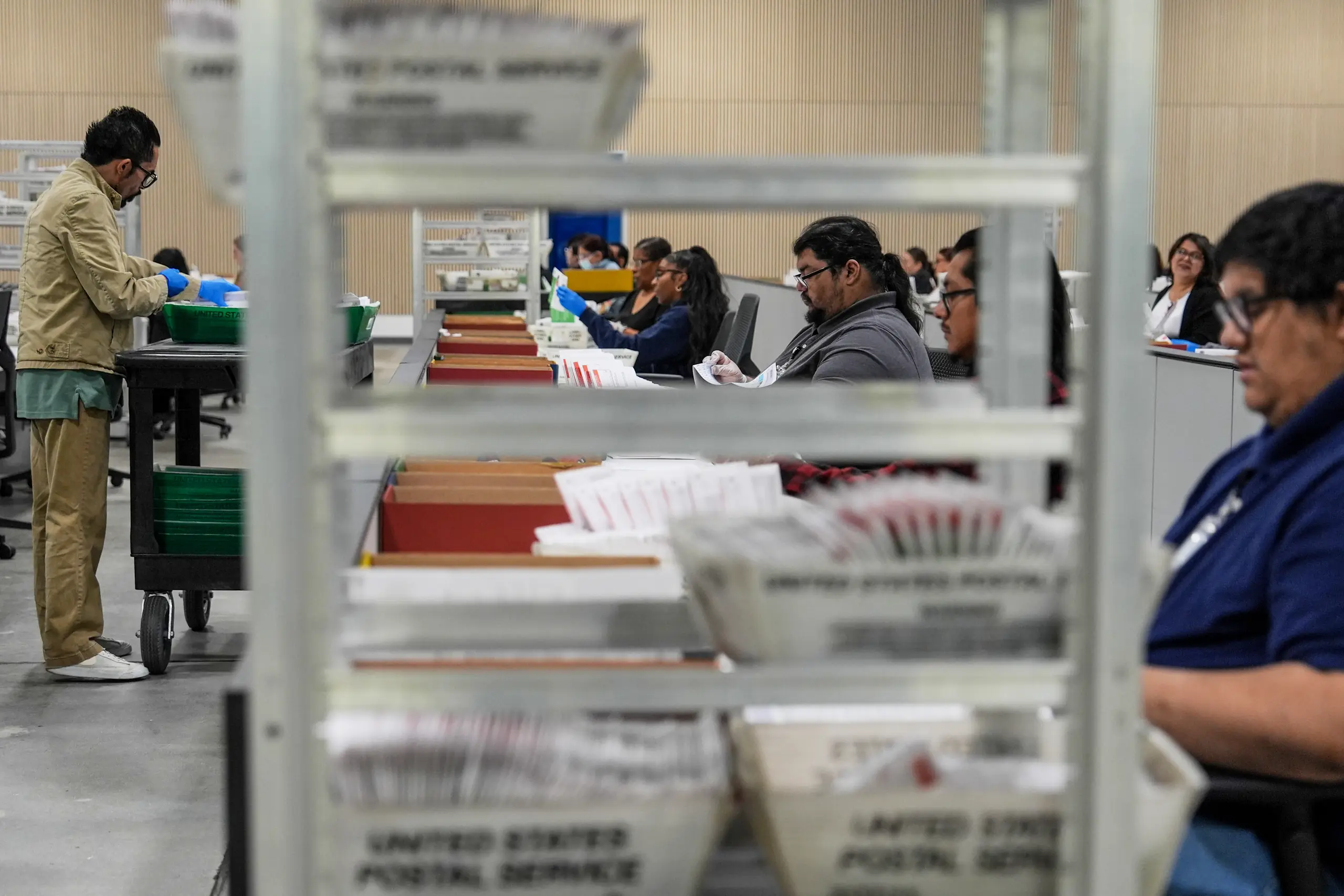
- Supreme Court rejects emergency injunction targeting California's postmark-plus-seven-days mail ballot counting window.
- Justices adhere to the venerable Purcell doctrine against disruptive last-minute judicial modifications to voting rules.
- Preserves counting protections for more than 6.8 million mail ballots returned across crucial House battleground districts.
WASHINGTON — In a consequential late-night ruling handed down mere hours before polling precincts opened across the continental United States, the Supreme Court of the United States formally denied an emergency petition that sought to invalidate hundreds of thousands of mail-in ballots across key congressional districts in California. The unsigned order, issued without public dissents from the high court bench, preserves existing state statutory ballot processing timelines and delivers a major procedural victory to state election officials who argued that an eleventh-hour judicial intervention would trigger catastrophic administrative confusion for millions of registered voters.
The high-stakes legal contest originated when conservative political organizations and campaign committees filed an emergency application with the high court's emergency docket, commonly referred to by legal scholars as the shadow docket. Petitioners contended that California's statutory provision permitting mail ballots postmarked by Election Day to be received and counted up to seven days later violates Article I, Section 4 of the United States Constitution—the Elections Clause—which grants state legislatures the power to prescribe the times, places, and manner of holding federal elections, subject to congressional override. The plaintiffs argued that federal statute establishes a single, uniform national "Election Day," and asserted that accepting ballots delivered in the post-election window impermissibly extends federal voting past statutory deadlines.
In urgent responsive briefs submitted to the court, California Secretary of State Shirley Weber and Attorney General Rob Bonta vehemently rejected those claims, emphasizing that California's longstanding ballot receipt statutes have governed general elections reliably for years. State legal counsels presented comprehensive evidentiary declarations detailing that more than 6.8 million California voters had already returned their official vote-by-mail envelopes through U.S. Postal Service distribution centers, secure municipal drop boxes, and early voting annexes. Altering ballot qualification standards on the eve of the election, the state maintained, would disenfranchise lawful citizens who cast their votes in faithful reliance on established statutory guidance.
Legal analysts across Washington noted that the Supreme Court's decision adheres strictly to the longstanding Purcell principle, a venerable judicial doctrine established in the 2006 case Purcell v. Gonzalez. The doctrine mandates that federal courts should not alter state election rules in the immediate run-up to an election to avoid voter bewilderment and administrative upheaval. While several conservative justices have previously signaled intellectual interest in exploring the broader contours of the Independent State Legislature doctrine, the court opted against unsettling voting mechanisms while voting was actively underway in the nation's most populous state.
The ruling carries immediate ramifications for the battle for control of the United States House of Representatives. California features at least six intensely contested congressional battlegrounds—spanning Orange County, the Central Valley, and northern Los Angeles County—where fractional margins of victory are expected to decide whether Republicans retain their narrow majority or Democrats reclaim the speaker’s gavel. Because California election workers conduct thorough signature verification procedures and offer statutory cure periods for flagged signatures, complete official vote tabulations in these pivotal districts are projected to extend well into next week, with all legally cast ballots protected under the Supreme Court's decisive order.
Congressional testimony scheduled for later this month is expected to address cross-agency coordination, focusing specifically on supply chain resiliency, sovereign compute clusters, and long-term capital allocation strategies designed to safeguard domestic competitiveness.